5 Awesome Weaviate Alternatives
 Yulei Chen
Weaviate is an open-source vector database that stores both objects and vectors, letting you combine vector search with structured filtering. It's a popular choice for AI applications, semantic search, and RAG pipelines thanks to built-in vectorizer modules and a GraphQL-based API. Weaviate Cloud starts at $45/month on the Flex tier (with a 14-day free sandbox), but costs scale quickly with vector count. A typical deployment with 5 million vectors can easily exceed $250/month. Self-hosting Weaviate on Sliplane gives you the full feature set for just €9/month per server, with predictable pricing, persistent storage, and HTTPS out of the box. Check out our easy deploy guide to get started in minutes.
But maybe Weaviate isn't the perfect fit for your project. Maybe you need a simpler developer experience, a fully managed solution, or a database built for massive distributed workloads. Here are 5 awesome alternatives worth considering.
1. Qdrant
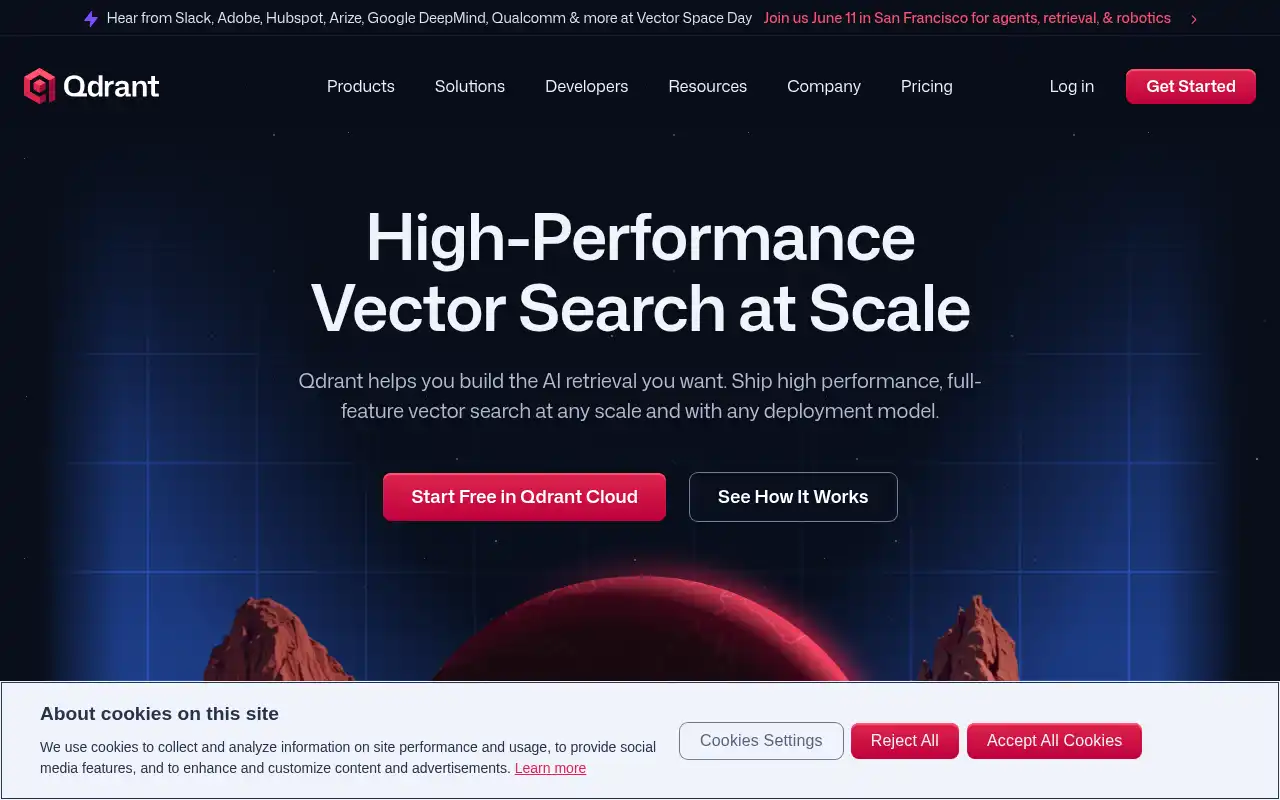
Qdrant is a high-performance vector search engine written in Rust, designed for speed and reliability. Where Weaviate bundles vectorizer modules and uses GraphQL, Qdrant focuses purely on vector search with a clean REST and gRPC API. It's become one of the most popular open-source vector databases with over 22,000 GitHub stars.
- Features: HNSW indexing with quantization (scalar, product, binary), payload filtering with full-text search, multi-vector and sparse vector support, snapshot-based backups, distributed deployment with sharding and replication, and a built-in web dashboard.
- Why You Should Use It: If raw search performance is your priority, Qdrant consistently benchmarks among the fastest vector databases. The Rust implementation keeps memory usage tight, and the resource-based pricing (pay for RAM, not per query) makes costs predictable. It's also fully open-source under Apache 2.0 with no feature gating.
- Why Not: Qdrant doesn't include built-in vectorizer modules like Weaviate does, so you'll need to generate embeddings externally. The ecosystem of integrations is growing but still smaller than Weaviate's, and the GraphQL-style filtering Weaviate offers is more flexible for complex queries.
- Pricing: Free tier with 1GB RAM cluster. Standard tier starts around $57/month per GB of RAM with hourly billing. Self-hosting is completely free under Apache 2.0. On Sliplane, you can self-host Qdrant for €9/month.
2. Chroma
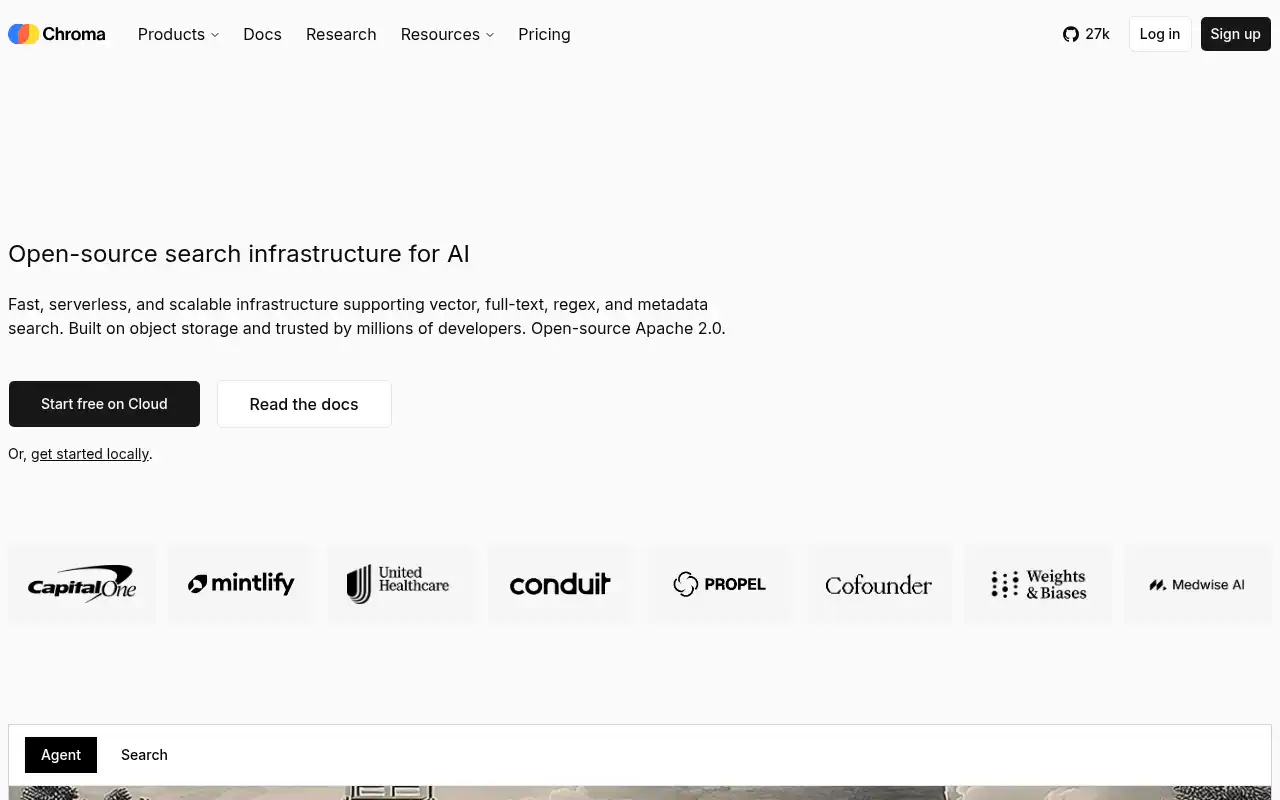
Chroma is an open-source embedding database built with developer experience as the top priority. It's the go-to choice for developers building RAG applications and AI prototypes who want the simplest possible API. Where Weaviate is feature-rich and enterprise-oriented, Chroma is lightweight and opinionated.
- Features: Simple Python and JavaScript SDKs, automatic embedding generation with built-in models, metadata filtering, multi-modal support (text, images, documents), object-storage-first architecture for cost efficiency, and full-text search alongside vector search.
- Why You Should Use It: If you're building a RAG application or AI prototype and want to go from zero to working in minutes, Chroma is hard to beat. The API is incredibly simple (just a few lines of code to store and query), and the built-in embedding functions mean you don't need a separate embedding pipeline. It's also Apache 2.0 licensed with the same codebase powering both open-source and cloud.
- Why Not: Chroma is optimized for developer speed, not enterprise scale. For datasets beyond a few million records, you may need to migrate to a more distributed solution. Advanced filtering capabilities lag behind Weaviate and Qdrant. The cloud offering is still relatively young compared to Weaviate Cloud.
- Pricing: Starter plan at $0/month with $5 in free credits. Team plan at $100/month with included usage credits. Storage costs as low as $0.02/GB/month thanks to object-storage architecture. Self-hosting is free under Apache 2.0. You can also self-host Chroma on Sliplane for €9/month.
3. Milvus
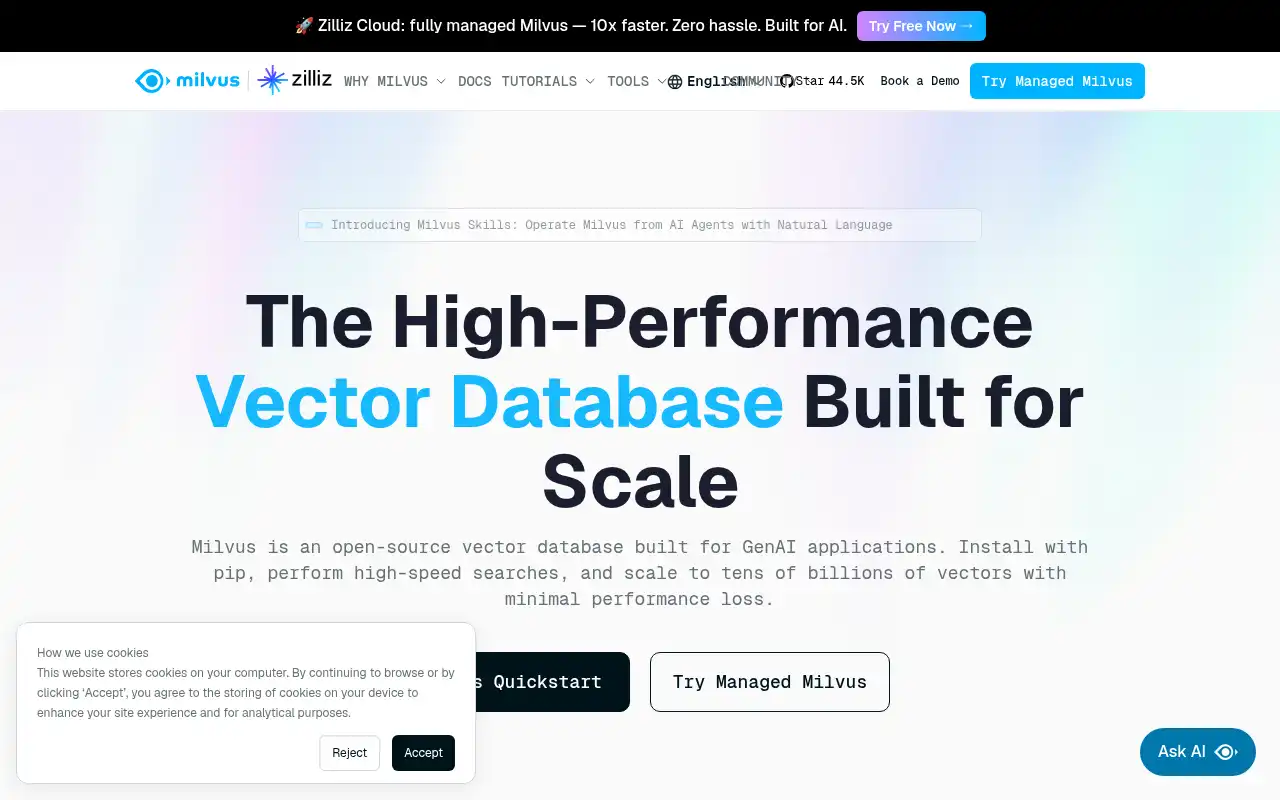
Milvus is an open-source vector database built from day one as a distributed system, making it the best choice for massive-scale vector workloads. While Weaviate handles moderate scale well, Milvus truly shines when you're dealing with billions of vectors across multiple nodes. Its managed cloud version is Zilliz Cloud.
- Features: Distributed architecture with horizontal scaling, multiple index types (HNSW, IVF, DiskANN, GPU indexes), hybrid search combining dense and sparse vectors, tiered storage (memory, SSD, object storage), multi-tenancy, and support for up to tens of billions of vectors.
- Why You Should Use It: If you're operating at serious scale (50M+ vectors) or expect to grow there, Milvus is purpose-built for it. The segment-based architecture allows true horizontal scaling that outperforms competitors on large datasets. Tiered storage lets you balance performance and cost, and GPU-accelerated indexing dramatically speeds up index building for large collections.
- Why Not: Milvus has a steeper learning curve than Weaviate or Chroma due to its distributed nature. Running it properly requires Kubernetes knowledge for self-hosting. For smaller datasets under 20M vectors, simpler alternatives like Qdrant or Chroma are often a better fit. The API is also more complex compared to Weaviate's GraphQL interface.
- Pricing: Free tier on Zilliz Cloud with 5GB storage. Serverless starts at $4 per million compute units. Dedicated instances from $126/GB/month. Self-hosting Milvus is completely free under Apache 2.0, though it typically requires Kubernetes, costing $300-600/month on cloud infrastructure at scale.
4. Pinecone
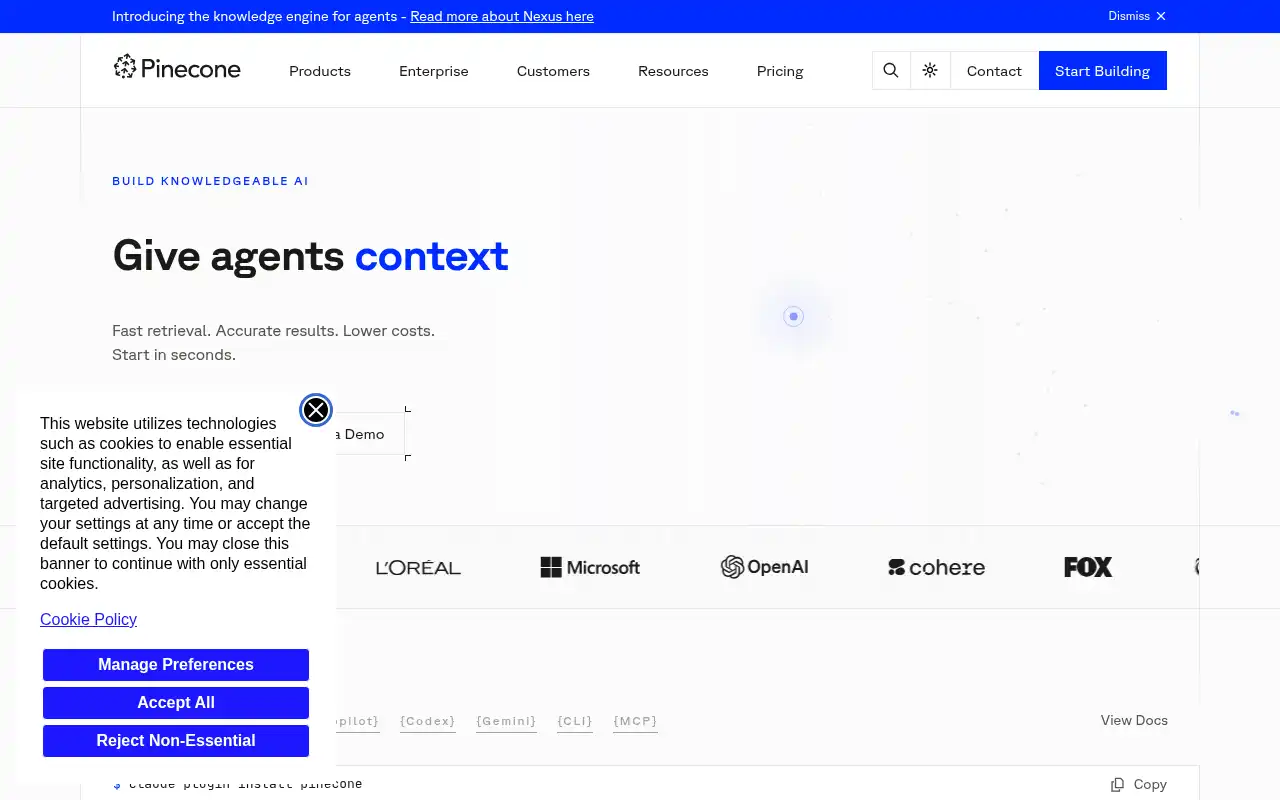
Pinecone is a fully managed, cloud-native vector database that takes the opposite approach to Weaviate: zero infrastructure to manage, ever. Where Weaviate gives you the option to self-host, Pinecone is SaaS-only, trading control for convenience. It's one of the most widely adopted vector databases in production AI applications.
- Features: Serverless architecture with automatic scaling, hybrid search (dense + sparse vectors), namespace-based multi-tenancy, metadata filtering, real-time upserts, integrations with LangChain, LlamaIndex, and all major AI frameworks, and SOC 2 Type II compliance.
- Why You Should Use It: If you want a vector database that "just works" without any operational overhead, Pinecone is the easiest path to production. There's nothing to deploy, scale, or maintain. The serverless pricing model means you pay only for what you use, and the free tier is generous enough for prototyping and small production workloads. The ecosystem integrations are best-in-class.
- Why Not: Pinecone is proprietary with no self-hosting option, which means vendor lock-in. At scale, costs can grow significantly (10M+ vectors can exceed $700/month). You have no control over infrastructure, regions are limited, and the maximum vector dimensionality is capped. If data sovereignty or cost control matters, self-hosted alternatives are a better choice.
- Pricing: Free Starter plan with 2GB storage. Standard at $50/month minimum. Enterprise from $500/month with HIPAA compliance and private networking. Usage-based rates: $4/million write units, $16/million read units, $0.33/GB/month storage. No self-hosting option.
5. Elasticsearch
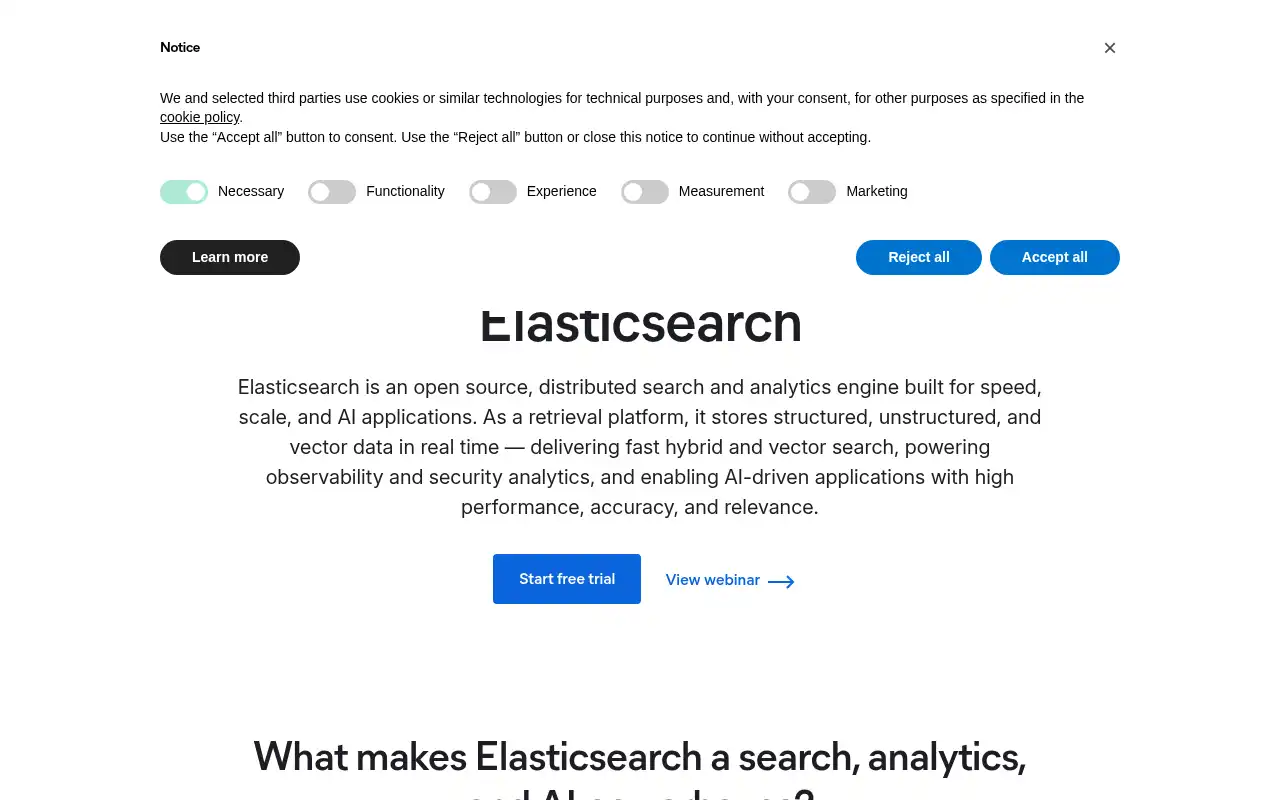
Elasticsearch is the veteran search engine that has evolved to support vector search alongside its legendary full-text search capabilities. If you already run Elasticsearch for logging, search, or analytics, adding vector search is a natural extension rather than deploying an entirely new database like Weaviate.
- Features: Combined vector + full-text + geospatial search in one engine, HNSW with Better Binary Quantization (BBQ) for 95%+ memory reduction, kNN search with pre-filtering, reciprocal rank fusion for hybrid scoring, built-in ML inference for embeddings, Kibana for visualization, and a massive ecosystem of integrations.
- Why You Should Use It: If you need vector search alongside traditional search, analytics, or observability, Elasticsearch saves you from running two separate systems. The BBQ quantization in ES 9.x makes vector storage remarkably efficient. The ecosystem is unmatched, with decades of tooling, monitoring, and community support. It's also great for hybrid search scenarios where you want to combine keyword matching with semantic similarity.
- Why Not: Elasticsearch is a general-purpose search engine, not a purpose-built vector database. Pure vector search performance trails specialized tools like Qdrant and Milvus. The JVM-based architecture uses more memory than Rust-based alternatives. Pricing for Elastic Cloud can get expensive quickly, and the licensing has shifted away from fully open-source (now SSPL + Elastic License). Max vector dimensions are capped at 4,096.
- Pricing: 14-day free trial. Elastic Cloud Hosted starts at $99/month (Standard). Serverless pricing from $0.09/VCU-hour for search. Self-hosting the open-source version is free. You can self-host Elasticsearch on Sliplane for €9/month.
Conclusion
| Tool | Best For | Ease of Setup | Focus | Cloud Pricing |
|---|---|---|---|---|
| Weaviate | AI apps with built-in vectorizers | Easy | Vector DB + modules | Weaviate Cloud from $45/mo |
| Qdrant | High-performance vector search | Easy | Pure vector search | Qdrant Cloud free tier, ~$57/mo/GB |
| Chroma | RAG prototypes, simple API | Very Easy | Developer experience | Chroma Cloud free tier, usage-based |
| Milvus | Billion-scale distributed search | Complex | Horizontal scaling | Zilliz Cloud free tier, from $126/GB/mo |
| Pinecone | Zero-ops managed vector DB | Very Easy | Fully managed SaaS | Pinecone free tier, from $50/mo |
| Elasticsearch | Hybrid vector + text search | Moderate | General-purpose search | Elastic Cloud from $99/mo |
Each tool fills a different gap: Qdrant for raw performance and predictable pricing, Chroma for the fastest path from idea to working prototype, Milvus for true billion-scale distributed workloads, Pinecone for zero-ops convenience, and Elasticsearch for combining vector search with your existing search infrastructure.
Weaviate remains a great choice if you want built-in vectorizer modules, a flexible GraphQL API, and a strong balance between features and simplicity. But if your priorities lean more toward pure performance, developer simplicity, massive scale, or hybrid search, one of these alternatives might be a better fit.
If you want to self-host any of these vector databases, check out our guides: